
A traditional Chinese Buddhist funeral follows a series of carefully observed rituals that honor the deceased and support their journey beyond life. From cleansing the body to chanting sacred sutras, each step holds symbolic meaning rooted in Buddhist beliefs. Offerings and incense play a significant role buddhist funeral packages, while family members perform specific mourning customs. The process concludes with burial or cremation, reflecting deep convictions about the afterlife. Understanding these practices reveals a complex interplay of spirituality and tradition.

Overview of Traditional Chinese Buddhist Funeral Rituals
Traditional Chinese Buddhist funeral rituals encompass a series of carefully prescribed ceremonies designed to honor the deceased and facilitate their passage to the afterlife https://hongenlife.com/en/traditional-buddhist-funeral/. These rituals often begin with the preparation of the body, including cleansing and dressing in simple, modest clothing symbolizing purity. A wake follows, during which family and friends gather to pay respects and offer incense. Offerings such as food, paper money, and symbolic items are presented to support the deceased in the next life. Rituals emphasize respect, reflection, and the impermanence of life, involving monks who oversee the spiritual aspects and guide the proceedings. The funeral culminates in the cremation or burial, accompanied by prayers and rites intended to ease the transition. This structured approach balances tradition with spiritual purpose.
How Chanting and Sutra Recitations Guide the Spirit
Chanting and sutra recitations serve as a vital spiritual conduit during Chinese Buddhist funerals, guiding the departed soul through the intermediate state between death and rebirth. Monks and family members vocalize sacred texts, such as the Amitabha Sutra, to invoke blessings and illuminate the path for the spirit.
These recitations aim to ease suffering, dissolve negative karma, and encourage a favorable rebirth. The rhythmic chanting creates a meditative atmosphere, fostering a sense of peace and spiritual passage.
The repetition of mantras and sutras functions not only as a ritual but also as a means to connect the living with the deceased, offering comfort and hope. Through these practices, the soul is gently led toward liberation and a new beginning beyond earthly existence.
Offerings and Incense in Traditional Chinese Buddhist Funerals
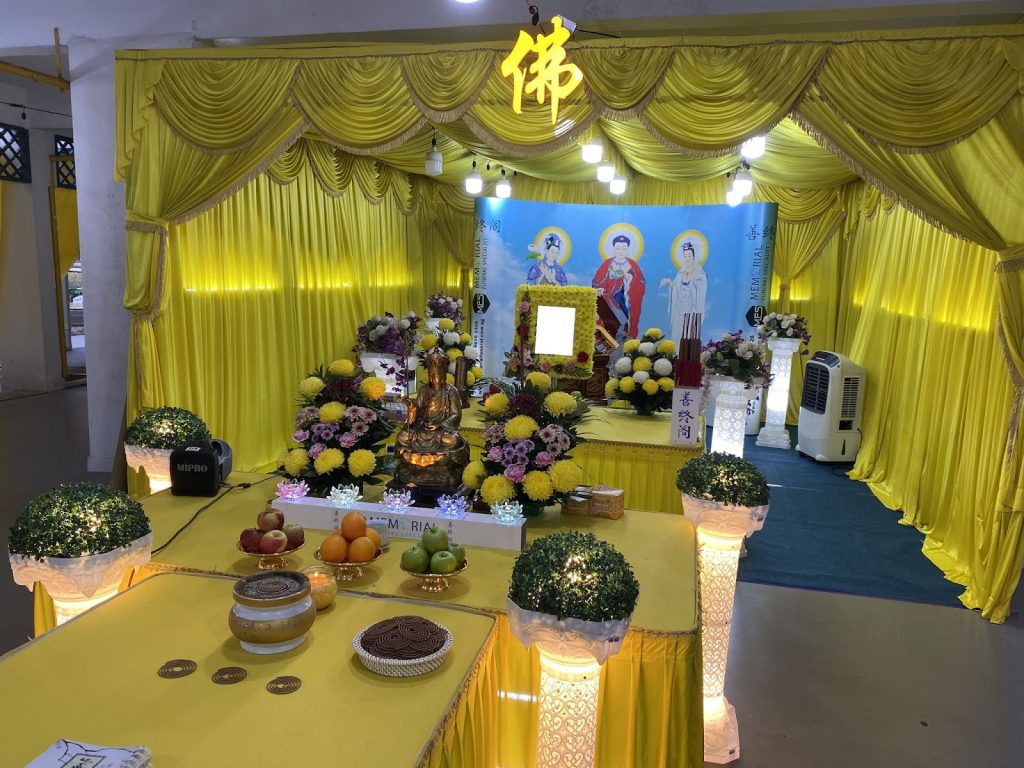
Alongside the spiritual guidance provided by sutra recitations, offerings and incense play a significant role in Chinese Buddhist funerals. Offerings typically include fruit, tea, and symbolic foods, presented on an altar to honor the deceased and invite blessings from deities and ancestors. These offerings reflect respect and the wish for a favorable rebirth.
Incense is burned continuously throughout the ceremony, symbolizing purification and the transmission of prayers to the spiritual sphere. The rising smoke is believed to carry the intentions of the living to the deceased and Buddha. Together, offerings and incense create a sacred atmosphere, facilitating connection between the physical and spiritual worlds while supporting the soul’s journey beyond life. This practice underscores reverence without imposing constraint, allowing individual interpretation within tradition.
Family Roles and Mourning Customs in the Funeral
Family members assume defined roles and adhere to specific mourning customs during Chinese Buddhist funerals, reflecting deep cultural values and respect for the deceased.
The immediate family, especially children and siblings, typically lead mourning rituals, dressed in white or subdued colors symbolizing purity and grief.
Elders often guide prayers and coordinate ceremonies, ensuring traditions are honored. Mourners may wear headbands or armbands to indicate their relationship to the departed.
Silence and restrained behavior are commonly observed, emphasizing solemnity and reflection. Additionally, family members might refrain from celebrations or personal pleasures during the mourning period to maintain respect.
These customs foster communal support, allowing relatives to express sorrow collectively while honoring the deceased’s life and legacy within the Buddhist framework.
Burial Practices and Afterlife Beliefs in Traditional Chinese Buddhist Funerals
Following the observance of mourning customs and assigned family roles, attention turns to the burial practices and afterlife beliefs that shape traditional Chinese Buddhist funerals. These rituals reflect a profound respect for the deceased’s journey beyond life, emphasizing liberation from earthly attachments. The burial process is meticulously designed to ease the soul’s passage and guarantee spiritual freedom.
- The body is cleansed and dressed in simple, often white, garments symbolizing purity and detachment.
- Incense and prayers are offered to guide the spirit toward enlightenment and peaceful rebirth.
- Burial sites are chosen with great care, often aligned with Feng Shui principles to harmonize energy and honor ancestral ties.
- Rituals include offerings to both the living and the departed, affirming ongoing spiritual connection and freedom from worldly suffering.
Conclusion
A traditional Chinese Buddhist funeral intricately combines ritual, prayer, and family participation to honor the deceased and support their spiritual journey. Through sutra chanting, offerings, and incense, the ceremony seeks to ease suffering and guide the spirit toward liberation. Family members observe respectful mourning customs while facilitating rites that reflect deep cultural and religious beliefs about death, rebirth, and the afterlife. These practices collectively embody compassion, reverence, and hope for a favorable passage beyond this life.